
Topoconductors, or topological superconductors, are materials which can create a brand new kingdom of count referred to as a topological state. This kingdom is important for quantum computing, in particular within the improvement of extra strong and scalable qubits. Here's how topoconductors work:
Basic Principles:
- Material CompositionTopoconductors are made from a combination of materials like indium arsenide and aluminum. These materials are carefully layered using molecular beam epitaxy to create a heterostructure that supports the topological state.
Molecular Beam epitaxy: Imagine you're building a very precise Lego structure, but instead of Lego bricks, you're using individual atoms or molecules. Is a technique for growing very thin layers of materials, one atom or molecule at a time.
Heterostructure: Is like a "sandwich" made of different materials, especially semiconductor materials. - Operating ConditionsTo work, a topoconductor must be cooled to very low temperatures (near absolute zero, -273 Celsius = 0 Kelvin) and exposed to a magnetic field.
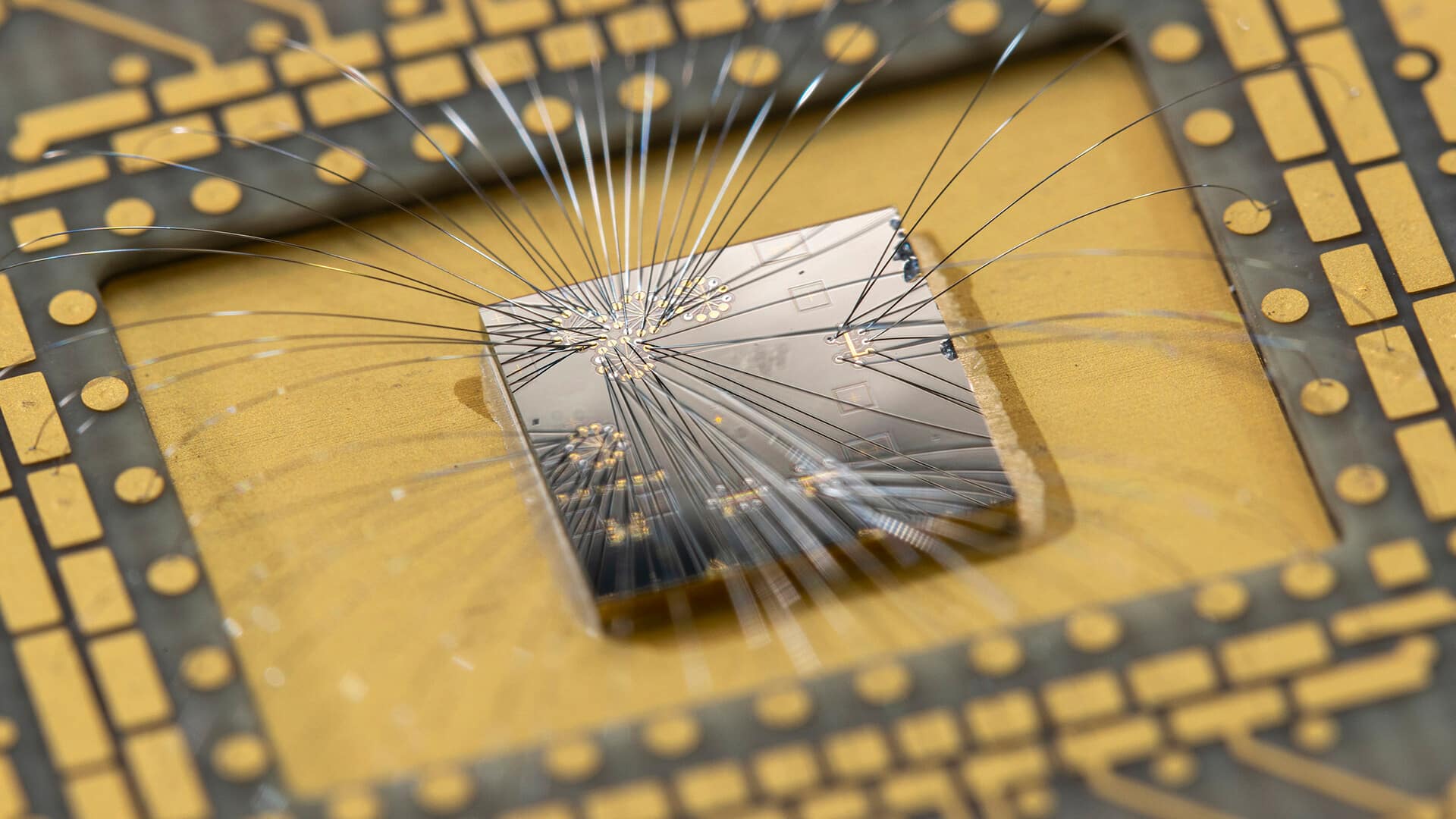
Topological Qubits
This type of quantum bit, or qubit, is constructed the use of unique "topoconducting" wires arranged in an "H" shape and connected with aluminum, growing particular debris called Majorana 0 modes to save quantum information. The unique property of those wires permits them to "cover" unpaired electrons, which makes the qubit more solid and less touchy to external noise, main to a more reliable quantum computing detail.
Debris: The leftover stuff after something has been broken or ruined.
Redout Mechanism
A tiny quantum dot acts as a high-quality-particular reader for the qubit. It sends electrons and microwave signals via the Majorana 0 modes, and through reading how those alerts alternate, it is able to determine the qubit's nation with almost perfect accuracy. This technique is comparable to shining a mild on an item and looking at how the mild displays to understand its residences, however on a quantum scale.
Advantages
The small size of these qubits (about 10 microns) allows for the integration of up to one million qubits on a single chip, enabling large-scale quantum computing applications. The use of digital control signals simplifies operations and enhances scalability compared to traditional analog methods